
"British coffee history"
700 article(s) found

The second part of the history of coffee-coffee spread to Europe
Pope VIII: it was not until 1615 that coffee officially entered Europe. The merchants of Venice had close trade ties with the Levant (the historical term refers to a large area of the Middle East that included Israel, Jordan, Lebanon and Syria) and began to import coffee into Italy. As soon as we came to Europe, the consumption of coffee rose rapidly. However, the introduction of coffee into Europe and
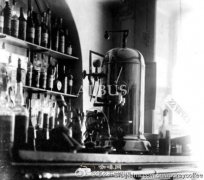
Coffee Chronicle the Development of Coffee History and Culture
In the 6th century, on the plateau of Abyssinia, a shepherd named Caldai drove goats to the new prairie for grazing, and accidentally found coffee fruit due to the accidental feeding of goats. In the early 10th century, Dr. Daggers, a famous doctor in Iraq, admitted and documented the pharmacological effects of coffee. This is one of the earliest valuable medical records of coffee. In the 11th century, the Arabs invented the whole

The History of the spread of Fine Coffee Culture and Common sense Coffee (2)
The first European description of coffee in 1573 was through German doctors staying in Syria. In the second half of the 16th century, the European people who traveled on the east coast of the land gradually spread. The British East India Company was established in 1660 and the East India Company was established in the Netherlands in 1602. The East India Company refers to the trade between Asia and Europe, South Asia and the East in the 17th and 19th centuries.

The History of the spread of Fine Coffee Culture and Common sense Coffee (2)
The first European description of coffee in 1573 was through German doctors staying in Syria. In the second half of the 16th century, the European people who traveled on the east coast of the land gradually spread. The British East India Company was established in 1660 and the East India Company was established in the Netherlands in 1602. The East India Company refers to the trade between Asia and Europe, South Asia and the East in the 17th and 19th centuries.

History, culture, stories and allusions of Kenyan coffee boutique beans
The exchange of professional baristas please follow the coffee workshop (Wechat official account cafe_style) the history, culture, stories and allusions of Kenyan coffee boutique beans that allow farmers to earn what they deserve is the basic belief of the coffee boutique movement. Although Cup of Excellence is currently the most representative and transparent competition in the industry, many of the details are actually modelled on Kenya's past life.

Introduction to the characteristics of Tanzania Coffee Flavor Manor
In 1886, Tanganyika Inland was placed under the German sphere of influence. In November 1917, British forces occupied the whole territory of Tanganyika. In 1920, Tanganyika became a British mandate. In 1946, the United Nations General Assembly adopted a resolution to change it into a British trust. On May 1, 1961, Tanzania achieved internal autonomy. On December 9 of the same year, independence was declared, and the Republic of Tanganyika was established a year later. Zanzibar became a British guarantor in 1890

The difference between Chinese black tea and Indian black tea what is the difference in the taste of Indian black tea Assam Darjeeling
The history of Indian black tea is native to northern and eastern India and has been planted on a small scale for hundreds of years. Camellia (Camelliasinensisvar.assamica) is a tea variety native to India, which usually brews stronger black tea. Camellia (Camellia)

A brief introduction to the history and culture of the origin and development of coffee beans in Kenya
This coffee has an excellent medium purity, crisp and refreshing taste. It has a fresh flavor and is most suitable for drinking iced coffee in summer. When tasting this coffee, if it is paired with sour fruits such as grapefruit, it will certainly give me the best coffee experience. Kenya is bordered to the north by Ethiopia, the origin of Arabica coffee trees, but it was not until the early 20th century that it began to engage in coffee cultivation.

St. Helena Coffee Price Variety Roast Degree Grind Scale Method Introduction
We trace the history of St. Helena coffee to the discovery of St. Helena Island, an unnamed island discovered by Portugal warships in 1502 and named St. Helena Island, which was used for hundreds of years as a supply station for fleets on voyages to Asia, or as a convalescent place for sailors. In 1732, the British East India Company acquired bourbon coffee trees from Yemeni mocha.

History of Coffee Culture Development Chronicle of Coffee Development
Memorabilia of the 6th century took place in the Abyssinia Plateau, when a shepherd named Caldai drove goats to the new prairie for grazing, and accidentally found coffee fruit because the goats ate a plant by mistake. At the beginning of the 10th century, Dr. Daggers, a famous doctor in Iraq, admitted and documented the pharmacological effects of coffee. This is one of the earliest valuable medical records of coffee.

History of Coffee Tree planting
In China, according to historical records, coffee trees were planted in Taiwan for the first time in 1884, and coffee cultivation in mainland China began in Yunnan. In 1902, a French missionary named Tian introduced seeds from Yingong, Binchuan County, Yunnan Province. it was successfully planted in a place called Zhu Kula, a tributary of the Jinsha River. The commercial cultivation of coffee in Yunnan began in 1985.

Citrus fruity Berman Estate Fine Coffee Bean Origin Development History Culture Introduction
The coastal terrain is plain, and most of the rest is plateau with an average altitude of 1500 meters. The east branch of the Great Rift Valley cuts the plateau vertically from north to south, dividing the plateau into east and west parts. The valley floor of the Great Rift Valley is 4501000 meters below the plateau and 50100 kilometers wide. There are lakes of varying depths and many volcanoes. The northern part is desert and semi-desert zone, accounting for about 56% of the total area of the country. in

A brief introduction to the Origin, Development, History and Culture of Fine Coffee beans in Berman Manor
Implement the presidential system. The cabinet is composed of 26 members, including the President, the Vice President, ministers and the Attorney General. The current cabinet was established in June 2013 and is composed of the President, the Vice President, ministers and the Attorney General. The cabinet list is as follows: president Uhuru Kenyatta (Uhuru Kenyatta), Vice President William Luto (William Ruto), Ministry of Interior and Central Government Coordination

The United States accounts for more than 20% of the world's annual coffee consumption.
At present, the annual coffee consumption of the United States accounts for more than ⒛% of the world, and it is the largest coffee consumer. But in the early British colonial period, the European immigrants in North America were mainly tea drinks, coffee was rare, and the culture of cafes was far inferior to that of Europe. At that time, there were no independent cafes in North America, and coffee drinks were sold in hotels, hotels, inns and restaurants, the most famous Green Dragon Cafe (GrcenDr)

The annual coffee consumption in the United States accounts for more than 20% of global coffee sales.
At present, the annual coffee consumption of the United States accounts for more than ⒛% of the world, and it is the largest coffee consumer. But in the early British colonial period, the European immigrants in North America were mainly tea drinks, coffee was rare, and the culture of cafes was far inferior to that of Europe. At that time, there were no independent cafes in North America, and coffee drinks were sold in hotels, hotels, inns and restaurants, the most famous Green Dragon Cafe (GrcenD)

A brief introduction to the Origin, Development, History and Culture of Fine Coffee beans in Berman Manor
Kenya is bordered to the north by Ethiopia, the origin of Arabica coffee trees, but it was not until the beginning of the 20th century that coffee cultivation began. In the 19th century, missionaries introduced Arabica trees from Yemen, but did not plant them in large quantities. It was not until 1893 that coffee was cultivated on a large scale after the introduction of Brazil's ancient bourbon seeds. That is to say, Kenyan coffee was of Brazilian origin.

A brief introduction to the history and culture of the origin and development of boutique coffee beans in Berman Manor
The capital Nairobi, with an area of 648 square kilometers, 1680 meters above sea level and a population of 3 million, is the political, economic, cultural, industrial and transportation center of the country. it has been designated as the capital since 1907 and is one of the international cities in Africa. Kenya has a total population of 41.8 million (2013), with a population growth rate of 2.7 per cent. There are 42 ethnic groups in China, mainly Kikuyu (17%) and Lucia (

A brief introduction to the history and culture of the origin and development of boutique coffee beans in Berman Manor
Kenya is bordered to the north by Ethiopia, the origin of Arabica coffee trees, but it was not until the beginning of the 20th century that coffee cultivation began. In the 19th century, missionaries introduced Arabica trees from Yemen, but did not plant them in large quantities. It was not until 1893 that coffee was cultivated on a large scale after the introduction of Brazil's ancient bourbon seeds. That is to say, Kenyan coffee was of Brazilian origin.

World Coffee Development History Chronicle of Coffee Development
Memorabilia of the 6th century took place in the Abyssinia Plateau, when a shepherd named Caldai drove goats to the new prairie for grazing, and accidentally found coffee fruit because the goats ate a plant by mistake. At the beginning of the 10th century, Dr. Daggers, a famous doctor in Iraq, admitted and documented the pharmacological effects of coffee. This is one of the earliest valuable medical records of coffee.

The History of Jamaican Coffee: where did the World's most expensive Blue Mountain Coffee come from
Professional coffee knowledge exchange more information about coffee beans Please follow the coffee workshop (Wechat official account cafe_style) the real Blue Mountain Coffee is one of the most advantageous growing conditions in the world, Jamaica's weather, geological structure and terrain together provide an ideal place. The ridge across Jamaica extends to the eastern part of the island, with the Blue Mountains rising to more than 2100 meters.